Ethiopian Coffee Culture: More Than Just a Drink
Coffee is more than just a beverage in Ethiopia — it is a way of life. Ethiopia is the birthplace of coffee, and the country’s relationship with the bean is deeply woven into its history, economy, and daily rituals. From the ancient forests of Kafa to the bustling coffee houses of Addis Ababa, coffee is a constant companion and a symbol of hospitality.
Understanding Ethiopian coffee culture is essential for any visitor to the country. Here’s everything you need to know about this beloved tradition.
The Birthplace of Coffee
Legend has it that coffee was discovered by a goat herder named Kaldi in the Kafa region of southwestern Ethiopia around the 9th century. After noticing his goats became energetic after eating red berries from a certain tree, Kaldi tried the berries himself and experienced a similar boost. He shared his discovery with local monks, who began using the berries to stay awake during long prayers.
Whether legend or fact, Ethiopia is undisputedly the birthplace of Coffea arabica, the world’s most popular coffee species. Wild coffee plants still grow in the forests of Kafa and Bale, and Ethiopia remains one of the world’s most important coffee producers.
The Ethiopian Coffee Ceremony
The Ethiopian coffee ceremony (buna) is the heart of Ethiopian coffee culture. It is a ritual of hospitality, community, and respect — a time to slow down, connect, and share. The ceremony typically takes about an hour and involves several steps:
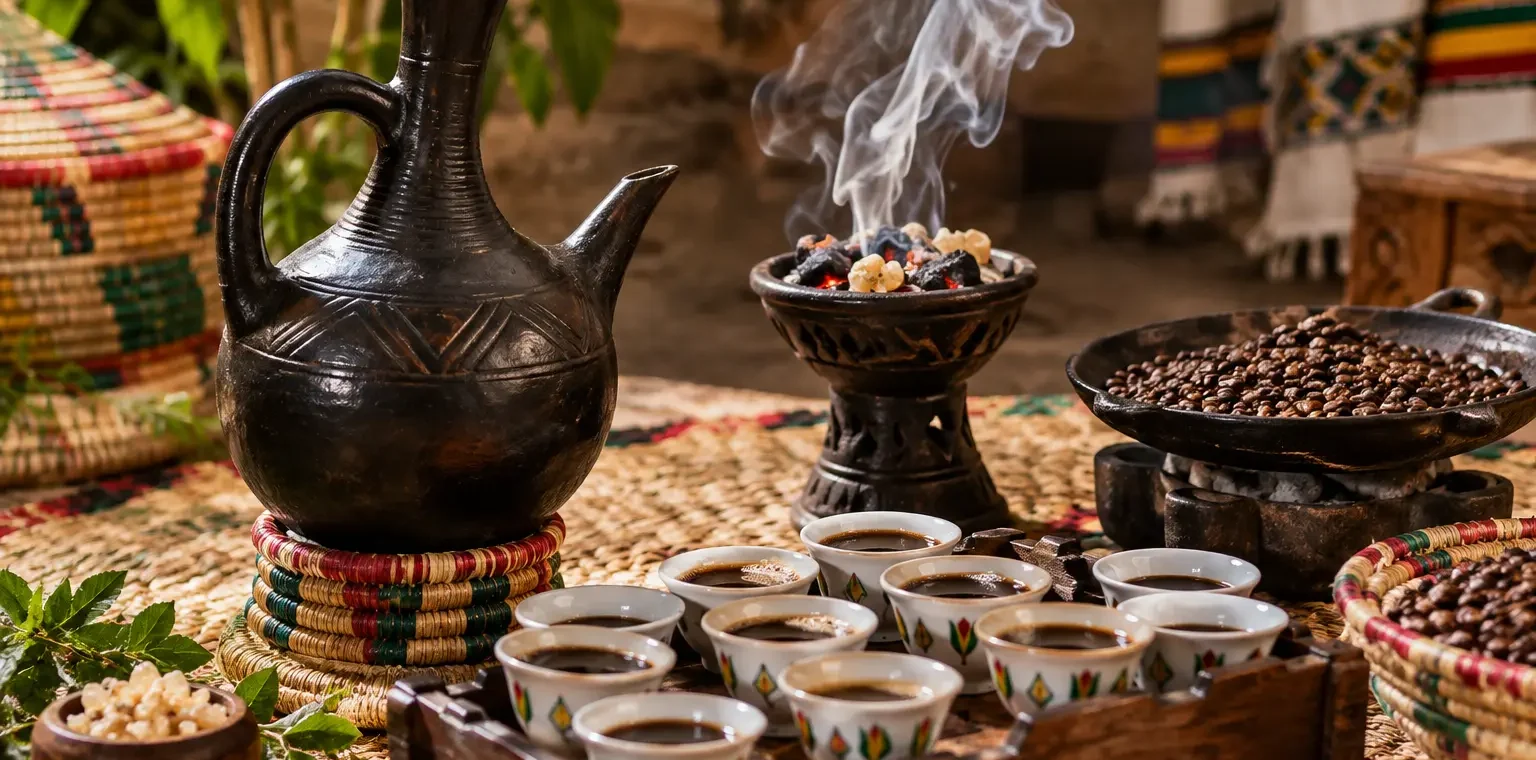
1. Preparing the Space: The host spreads fresh grass or flowers on the floor and lights incense (often frankincense or myrrh) to create a welcoming atmosphere.
2. Roasting the Beans: Green coffee beans are roasted over hot coals in a flat pan. The host shakes the pan continuously to prevent burning, and the aroma fills the room. Guests are often invited to waft the smoke toward them for good luck.
3. Grinding the Beans: Once roasted, the beans are ground using a traditional wooden mortar and pestle (mukecha and zenezena).
4. Brewing the Coffee: The ground coffee is placed in a jebena — a traditional clay pot with a long spout — and boiled over hot coals. The coffee is brewed slowly, and the jebena is often passed through the air to cool.
5. Serving the Coffee: The coffee is poured into small, handle-less cups (sini) from a height to create a small froth. It is served with sugar, salt, or sometimes butter, and accompanied by popcorn, roasted barley, or traditional snacks.
6. Three Rounds: The ceremony traditionally involves three rounds of coffee — Abol (the first), Tona (the second), and Baraka (the third, meaning “blessing”). Each round is believed to have its own character and blessing.
Coffee in Daily Life
Coffee is woven into every aspect of Ethiopian life. It is offered to guests as a sign of welcome, shared among friends and colleagues as a social ritual, and used as a way to begin and end the day. Coffee is also important in religious and cultural ceremonies, and it is common to see coffee ceremonies at weddings, funerals, and holidays.
Regional Coffee Varieties
Ethiopia produces some of the world’s most prized coffee, with distinct regional characteristics:
-
Yirgacheffe: Floral, citrusy, and tea-like; one of Ethiopia’s most famous coffees.
-
Sidamo: Bright, fruity, and full-bodied; from the Sidama region.
-
Harrar: Bold, winey, and complex; from the eastern highlands.
-
Limu: Balanced, spicy, and sweet; from southwestern Ethiopia.
-
Jimma: Mild, earthy, and rich; from the Jimma region.
Coffee Tours and Experiences
Visitors to Ethiopia can immerse themselves in coffee culture through:
-
Coffee farm visits in Yirgacheffe, Sidama, or Jimma to see how coffee is grown and processed.
-
Coffee ceremonies at hotels, restaurants, and private homes.
-
Coffee museums and roasteries in Addis Ababa.
-
Coffee markets such as Merkato in Addis Ababa or the Harar coffee market.
-
Traditional coffee houses across the country, where locals gather to drink and socialize.
How to Experience a Coffee Ceremony Respectfully
-
Accept the invitation if offered — it is a sign of friendship.
-
Wait for the host to serve you rather than helping yourself.
-
Drink at least one cup — refusing may be seen as impolite.
-
Compliment the coffee and thank the host.
-
Participate in the incense and conversation — the ceremony is as much about connection as it is about coffee.