The Danakil Depression: Journey to the Hottest Place on Earth
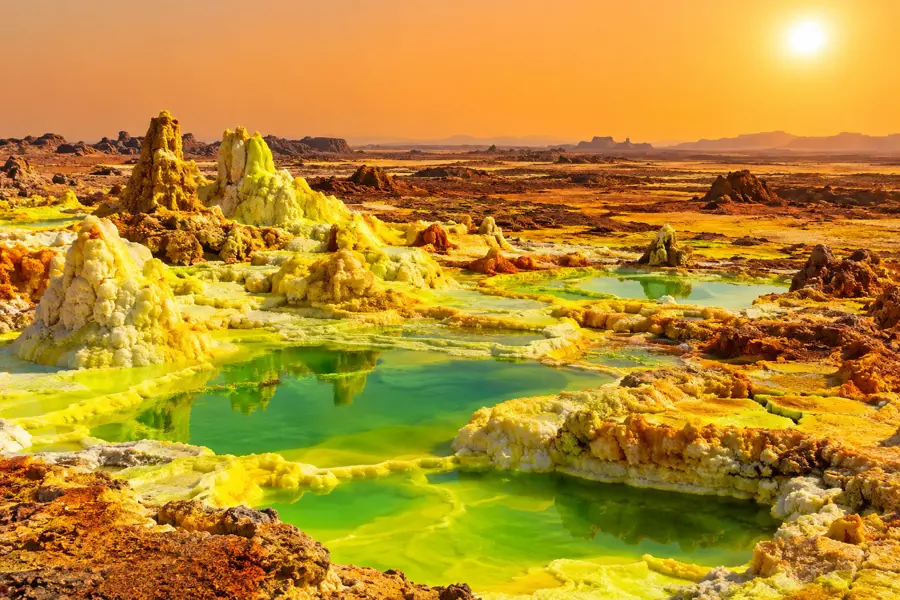
The Danakil Depression is one of the most extreme, alien, and unforgettable places on Earth. Located in northeastern Ethiopia near the border with Eritrea, it is one of the hottest inhabited places on the planet, with temperatures regularly exceeding 50°C (122°F). It sits more than 100 meters below sea level and is geologically one of the most active regions in the world — a place where the Earth’s crust is slowly tearing apart.
For adventurous travelers, the Danakil Depression is a bucket-list destination. This guide covers everything you need to know about visiting this extraordinary landscape.
What Is the Danakil Depression?
The Danakil Depression is a geological depression formed by the divergence of three tectonic plates — the African, Arabian, and Somali plates — which are slowly pulling apart. This tectonic activity creates a landscape of extraordinary features:
-
Active volcanoes with lava lakes
-
Sulfur springs in neon yellow, green, and orange
-
Salt flats stretching to the horizon
-
Acid pools and mineral formations
-
Extreme heat and arid desert
The depression is part of the Afar Triangle, one of the cradles of human evolution — the famous fossil “Lucy” (Australopithecus afarensis) was discovered nearby.
The Main Attractions
1. Dallol
Dallol is the most surreal and visually striking site in the Danakil. It is a volcanic crater filled with acid pools, sulfur springs, and salt formations in vivid shades of yellow, green, orange, and white. The landscape looks like another planet — and with ground temperatures exceeding 70°C (158°F), it practically is. The colors come from sulfur, iron oxide, and other minerals, and the area is dotted with strange formations created by geysers and mineral deposits.
Tip: Visit early in the morning for cooler temperatures and the best light for photography.
2. Erta Ale Volcano
Erta Ale is one of the few volcanoes in the world with a persistent lava lake. Located in the Danakil Depression, this shield volcano has been continuously active for decades, and its summit caldera contains a bubbling lake of molten rock. Trekking to the summit (a 3–4 hour hike) and camping overnight near the crater is a highlight of any Danakil expedition.
Tip: The lava lake is most active at night, when the glow of the molten rock is visible from the rim.
3. Lake Asale Salt Flats
Lake Asale is a vast salt lake that has dried into a hard, white crust stretching for kilometers. Here, Afar salt miners extract salt blocks by hand, using traditional methods that have been passed down for centuries. You can witness the salt caravans — camels and donkeys loaded with salt — that have crossed this desert for generations.
Tip: The best time to see the salt flats is at sunrise or sunset, when the white crust glows with pink and gold light.
4. The Afar People
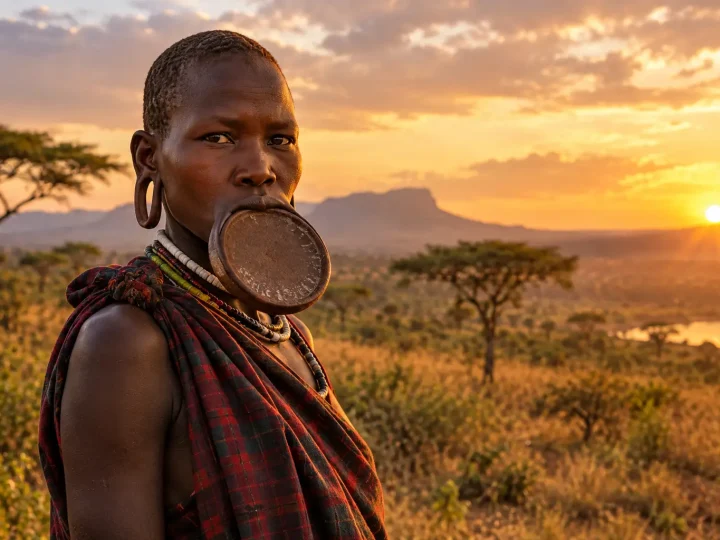
The Danakil is home to the Afar people, a nomadic pastoralist group who have adapted to life in one of the harshest environments on Earth. Visiting an Afar village offers insight into their resilient culture, traditional dress, and salt-mining traditions.
Best Time to Visit
The Danakil Depression is visitable from November to February, when temperatures are slightly cooler (though still hot). Travel is strongly discouraged from June to September, when temperatures are dangerously high.
How to Get There
Most tours begin in Mekele, the regional capital of Tigray, which is accessible by domestic flight from Addis Ababa. From Mekele, tours travel by 4×4 to the Danakil, often with an overnight stop in Hamedela or Ahmedela before continuing to Dallol, Erta Ale, and the salt flats.
What to Expect
-
Extreme heat: Temperatures can exceed 50°C. Hydration is critical.
-
Rough roads: Travel is by 4×4 on unpaved, rocky tracks.
-
Basic camping: Accommodation is in simple camps or guesthouses with limited facilities.
-
Military escorts: Due to the region’s proximity to the Eritrean border, most tours travel with a military escort.
-
Early starts: To avoid the heat, most activities begin before dawn.
What to Pack
-
Lightweight, loose-fitting, light-colored clothing
-
Wide-brimmed hat and sunglasses
-
High-SPF sunscreen
-
Plenty of water (at least 4–5 liters per day)
-
Electrolyte tablets
-
Sturdy hiking boots for Erta Ale
-
Headlamp for the volcano hike
-
Warm layer for nighttime (desert nights can be cool)
-
Camera with extra batteries and protection from dust
-
Personal first-aid kit
Responsible Travel
-
Follow your guide’s instructions at all times — the terrain is dangerous.
-
Don’t touch the sulfur springs or acid pools — they can cause severe burns.
-
Respect the Afar people — ask before taking photos and don’t interfere with salt caravans.
-
Carry out all trash — the desert environment is fragile.
-
Choose a reputable operator with experienced guides and proper safety equipment.