Trekking in Ethiopia: A Guide to the Best Routes and Mountains
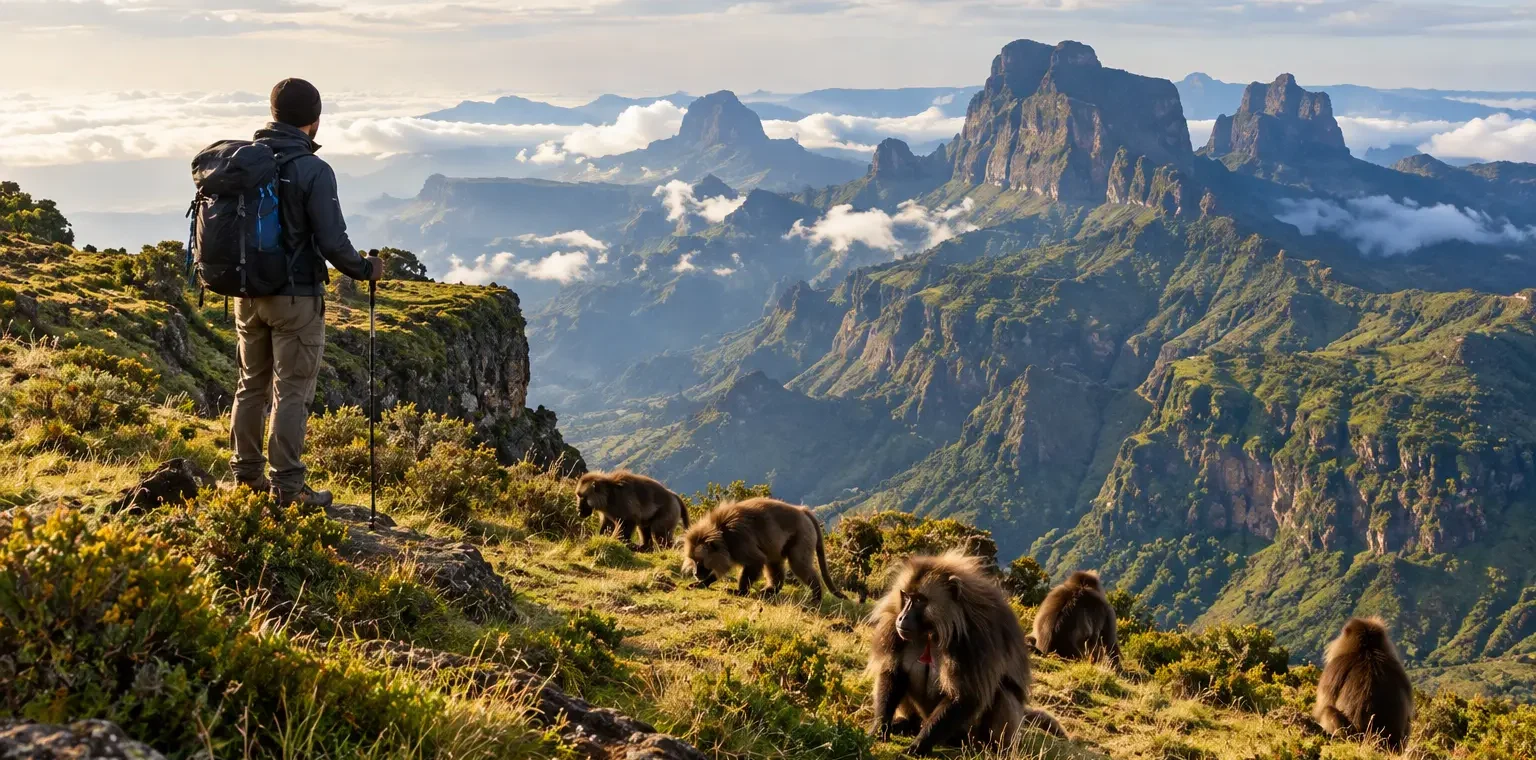
Ethiopia is one of Africa’s most underrated trekking destinations. Far from the crowded trails of Kilimanjaro or Everest Base Camp, Ethiopia offers wild, remote, and breathtakingly beautiful landscapes — from the jagged peaks of the Simien Mountains to the volcanic plateaus of Bale and the dramatic cliffs of Gheralta.
Whether you’re a seasoned trekker or a casual hiker, Ethiopia has a trail for you. This guide covers the best trekking routes, what to expect, and how to prepare.
Why Trek in Ethiopia?
Ethiopia offers a unique combination of factors that make it a world-class trekking destination:
-
Dramatic Landscapes: From Africa’s largest Afro-alpine plateau to volcanic crater lakes and towering escarpments.
-
Endemic Wildlife: Spot Gelada baboons, Ethiopian wolves, Walia ibex, and mountain nyala — species found nowhere else on Earth.
-
Cultural Encounters: Trek through remote villages and share trails with local herders.
-
Few Crowds: Unlike other trekking destinations, Ethiopia’s trails are often blissfully empty.
-
Affordable: Trekking in Ethiopia is significantly cheaper than in Nepal or Tanzania.
The Best Trekking Routes in Ethiopia
1. Simien Mountains National Park
Location: Northern Ethiopia, near Gondar
Duration: 3–10 days
Difficulty: Moderate to challenging
Best Time: October – March
The Simien Mountains are Ethiopia’s premier trekking destination and a UNESCO World Heritage Site. The park is home to Ras Dashen (4,533m), Ethiopia’s highest peak, and offers spectacular views of jagged peaks, deep valleys, and sheer escarpments that drop over 1,500 meters.
Highlights:
-
Gelada baboon troops (hundreds of individuals)
-
Walia ibex on the cliffs
-
Ras Dashen summit
-
Imet Gogo viewpoint
-
Traditional village visits
Popular Routes:
-
3-day trek: Sankaber – Geech – Chenek
-
5-day trek: Adds Imet Gogo and Ras Dashen
-
10-day trek: Full traverse of the park
2. Bale Mountains National Park
Location: Southeastern Ethiopia, near Robe
Duration: 2–7 days
Difficulty: Easy to moderate
Best Time: November – April
The Bale Mountains offer a different trekking experience — vast Afro-alpine plateaus, cloud forests, and volcanic peaks. The park is the best place in the world to see the Ethiopian wolf, and it also protects the mountain nyala and over 300 bird species.
Highlights:
-
Sanetti Plateau (4,000m+)
-
Harenna Forest
-
Tullu Dimtu (4,377m) — Ethiopia’s second-highest peak
-
Ethiopian wolf sightings
-
Giant lobelia and heather forests
Popular Routes:
-
2-day trek: Dinsho – Gaysay – Sanetti
-
4-day trek: Adds Harenna Forest
-
7-day trek: Full traverse of the Bale massif
3. Gheralta Mountains
Location: Northern Ethiopia, near Hawzien
Duration: 1–3 days
Difficulty: Moderate to challenging (some scrambling)
Best Time: October – March
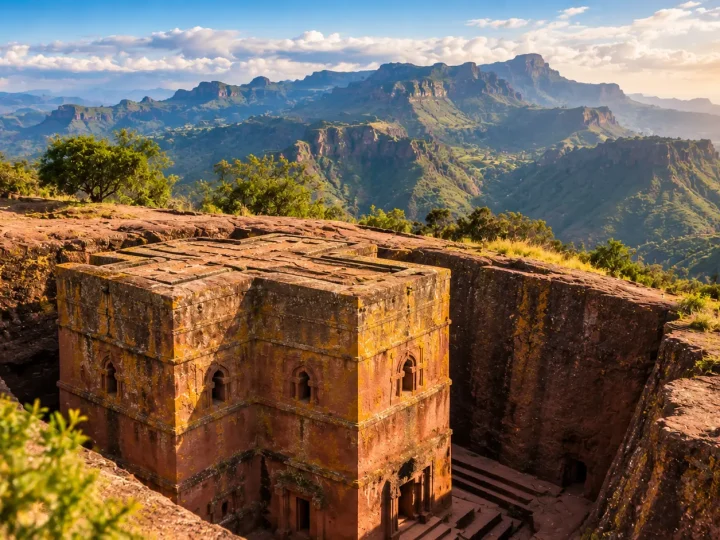
The Gheralta Mountains are known for their dramatic red sandstone peaks and ancient rock-hewn churches. Trekking here is as much a cultural pilgrimage as a hike — many trails lead to cliff-perched churches accessible only by hand-and-foot climbs.
Highlights:
-
Abuna Yemata Guh (cliff church)
-
Maryam Korkor and Daniel Korkor
-
Panoramic views over the Tigray plains
-
Traditional Tigrayan villages
Popular Routes:
-
1-day trek: Maryam Korkor and Daniel Korkor
-
2-day trek: Adds Abuna Yemata Guh
-
3-day trek: Full Gheralta church circuit
4. Wenchi Crater Lake
Location: Central Ethiopia, near Ambo
Duration: 1 day
Difficulty: Easy
Best Time: October – March
Wenchi Crater Lake offers a gentle day hike through beautiful highland scenery. The trail descends from the crater rim to the lake shore, passing waterfalls, hot springs, and farmland. Horse riding and boat trips are also available.
Highlights:
-
Crater rim views
-
Glass floor viewpoint
-
Debre Island and Kirkos Church
-
Horse riding and boat trips
5. Ras Dashen Summit Trek
Location: Simien Mountains
Duration: 5–7 days
Difficulty: Challenging
Best Time: October – March
Ras Dashen (4,533m) is Ethiopia’s highest peak and a bucket-list summit for serious trekkers. The trek involves steep ascents, high altitude, and remote camping, but rewards with panoramic views from the roof of Ethiopia.
Highlights:
-
Summit of Ethiopia’s highest peak
-
Spectacular high-altitude scenery
-
Remote camping under the stars
-
Gelada and Walia ibex sightings
What to Expect on an Ethiopian Trek
Accommodation: Options include camping (most common), community lodges, and basic guesthouses. In the Simien Mountains, community trekking lodges offer comfortable beds and meals.
Guides and Porters: Hiring a licensed guide and porters is mandatory in national parks. This supports local communities and ensures your safety.
Permits: Park entrance fees and camping permits are required and are usually arranged by your tour operator.
Food: Trekking cooks prepare simple but hearty meals — pasta, rice, lentils, vegetables, and sometimes meat. Vegetarian and vegan options are available with advance notice.
Altitude: Many treks reach altitudes above 3,500 meters. Acclimatize properly and drink plenty of water.
Weather: Days are usually sunny and warm, but nights can be freezing, especially at high altitude. Rain is possible during the wet season (June – September).
What to Pack for Trekking in Ethiopia
-
Sturdy hiking boots (broken in)
-
Layered clothing (warm base layers, fleece, waterproof jacket)
-
Sleeping bag (rated to -10°C for high-altitude treks)
-
Sun hat, sunglasses, and sunscreen
-
Water purification tablets or filter
-
Headlamp and extra batteries
-
Snacks (nuts, dried fruit, energy bars)
-
Personal first-aid kit
-
Trekking poles (optional but recommended)
-
Camera and binoculars
Responsible Trekking
-
Choose responsible operators that pay fair wages to guides and porters.
-
Carry out all trash — including biodegradable waste.
-
Respect local customs and ask before taking photos.
-
Support community lodges and local businesses.
-
Don’t feed wildlife and keep a safe distance.